 (£)
(£)
 (NOK)
(NOK)  (DKK)
(DKK)  (SEK)
(SEK)  (€)
(€) 

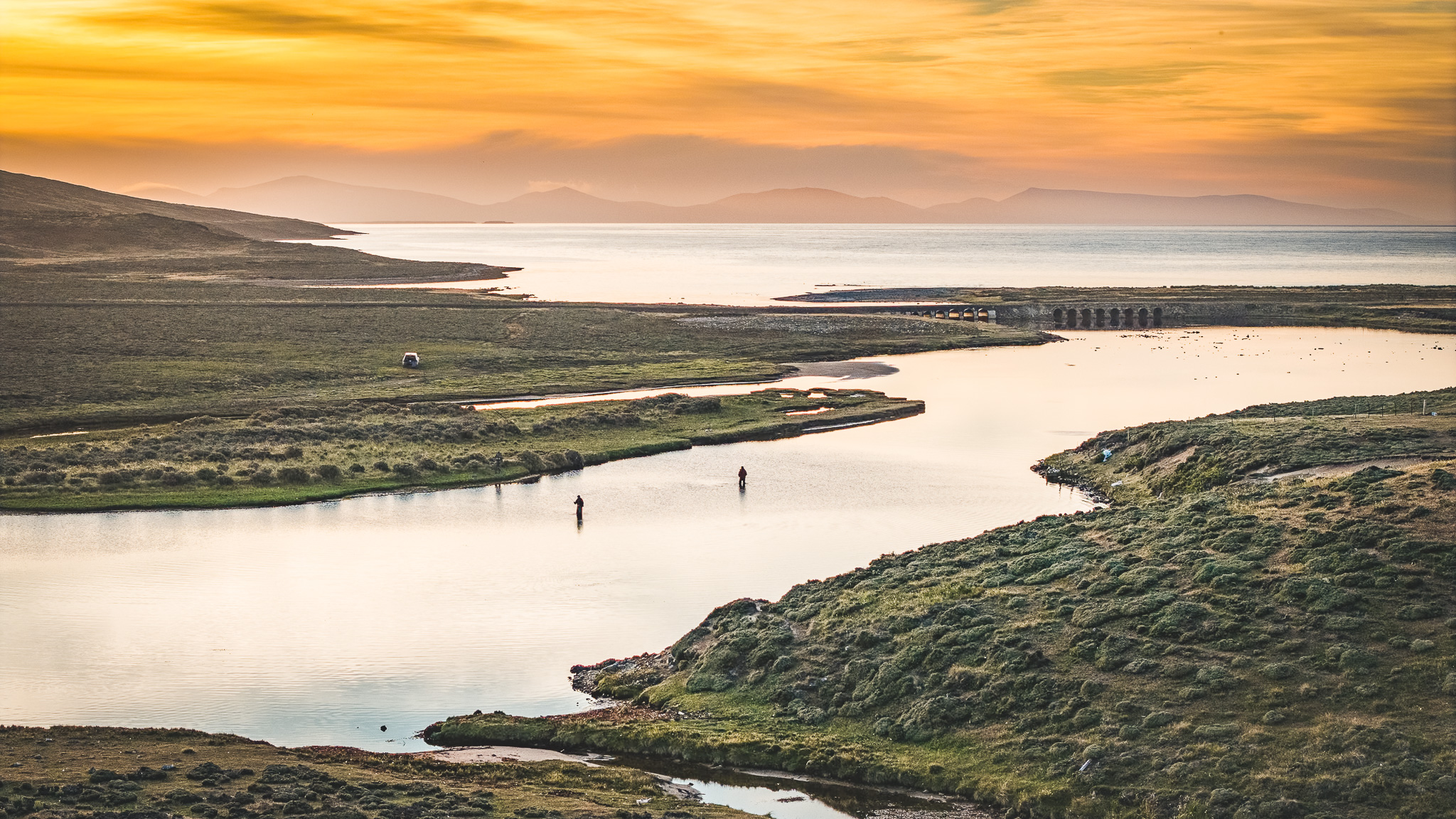
For any long-haul fishing adventure adequate planning is absolutely crucial, especially when travelling to fish in unknown waters.
Most of the better known fishing destinations tend to have easily accessible and detailed information regarding what to expect and often provide fully inclusive trips, a choice of lodges and no shortage of advice on what equipment is required, best time of year, guides, food etc . . . In short, a belt and braces package.
But if you’re visiting somewhere a bit more off the beaten track then a little extra digging may well be needed. Fishing-wise, there are two absolutely crucial things to consider: timing, as in when to go, and equipment.
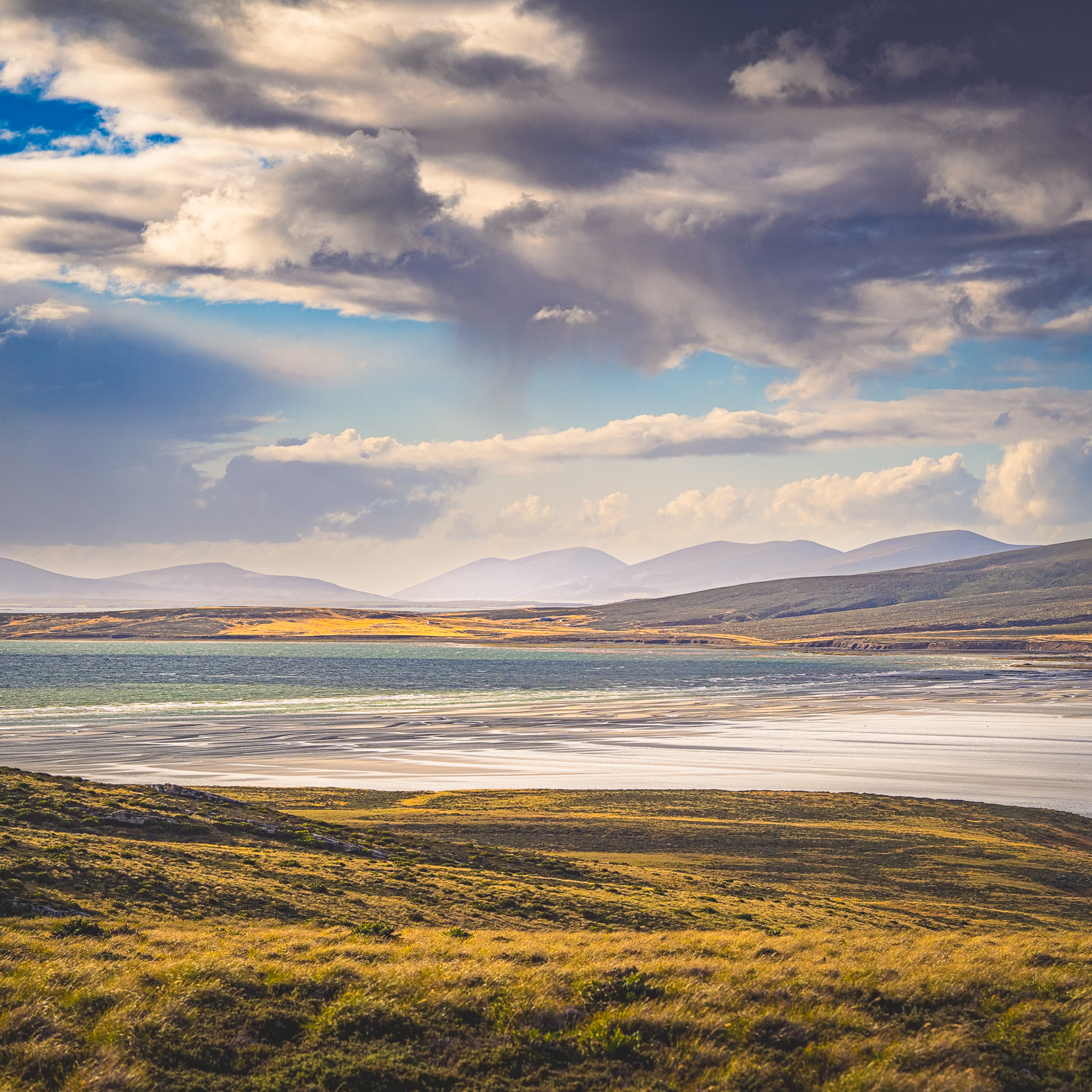
Timing Your Trip – Seasons, Tides & Moon Phases
This is vital, especially when targeting migratory species. There’s no point travelling to the other side of the planet without optimising your chances and being there at prime time, or as close to it as you can.
For this trip, we were fortunate to find a couple of personal contacts, through friends of friends, who had actually fished in the Falklands. But making contact with a guide who operates in the area you’re targeting can be worth its weight in gold, or silver. As the islands are in the southern hemisphere the seasons there are the opposite to here in the UK, starting around November time and ending around April.
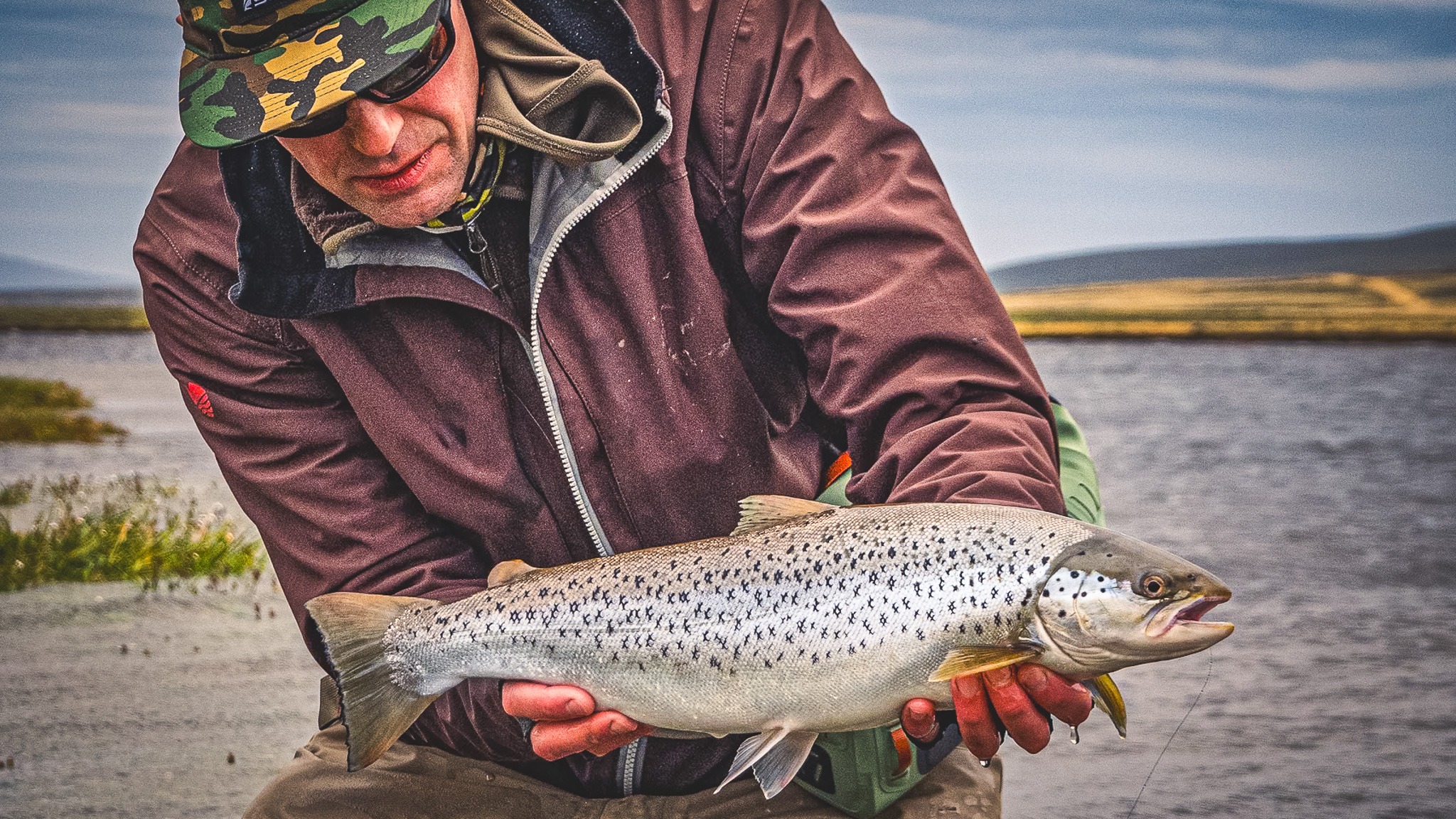
For sea trout in the Falklands, as in South America/Patagonia, February and March are considered the best months. However, on scrutinising a Facebook Group dedicated to Falklands trout fishing we realised that pictures of spanking fresh sea trout were cropping up in January and that the further into February and March you got the more coloured the fish were.
We also discovered there was a large party booked to fish at one of our prime target areas in the second week of February. So, from research time spent on the computer and messaging a local guide the plan was hatched to go slightly earlier than the accepted ‘prime time’. We’d also taken into account moon phases and high tides, and timed our trip to coincide with the first big tide of that period.
It was a risk but as educated a one as we were able to make from afar. If the fish hadn’t arrived in numbers then it could have backfired. On the upside if we’d called it right then we reckoned there would be good numbers of fish fresh in from the salt and there would be very few other anglers about.
Equipment – Getting Your Set-Up Right
Once we’d committed to the dates, the next priority was making sure we had the right equipment. The last thing in the world you want is to make a trip of a lifetime without having the perfect tools for the job.
The sea trout in the Falklands don’t go as big as in Tierra del Fuego but they do go in to double figures. The record is 22lb 12 1/2oz, caught in March 1992. The average size is probably in the 3-5lb bracket with good numbers of fish around the 6-8lb mark and always the chance of a 10lb plus fish. And there are a lot of fish, so you want to have a set up you can have complete faith in.
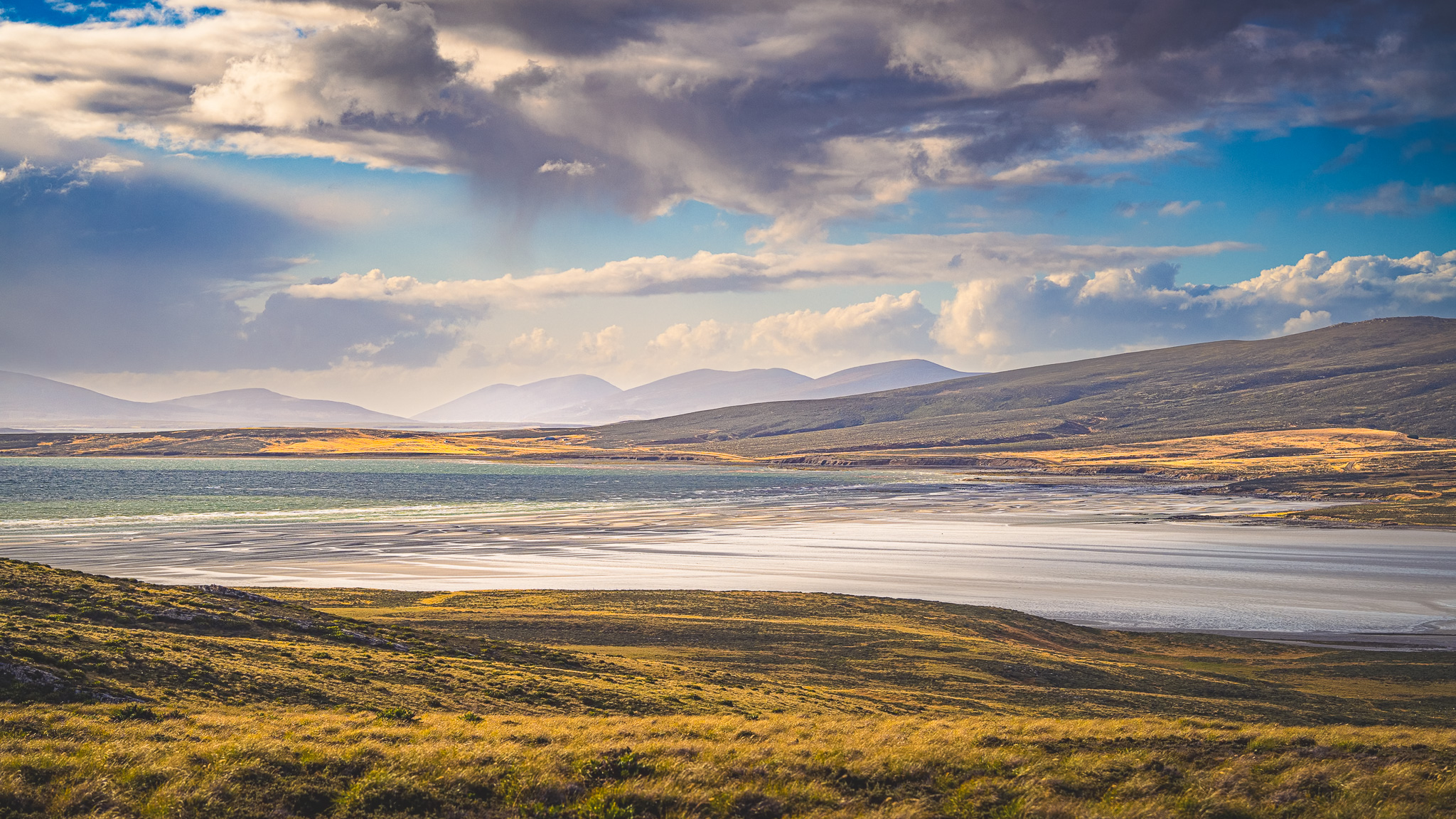
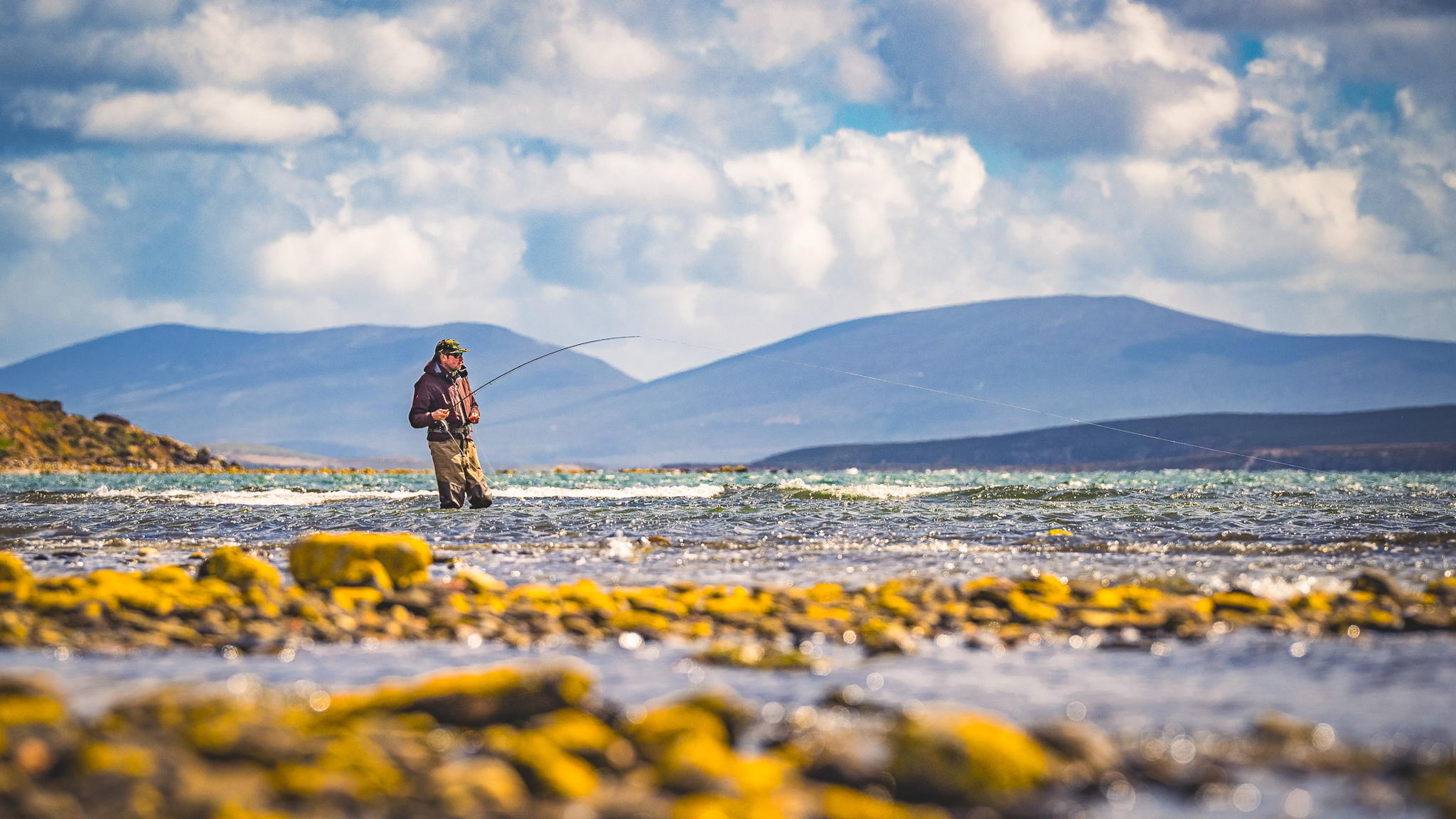
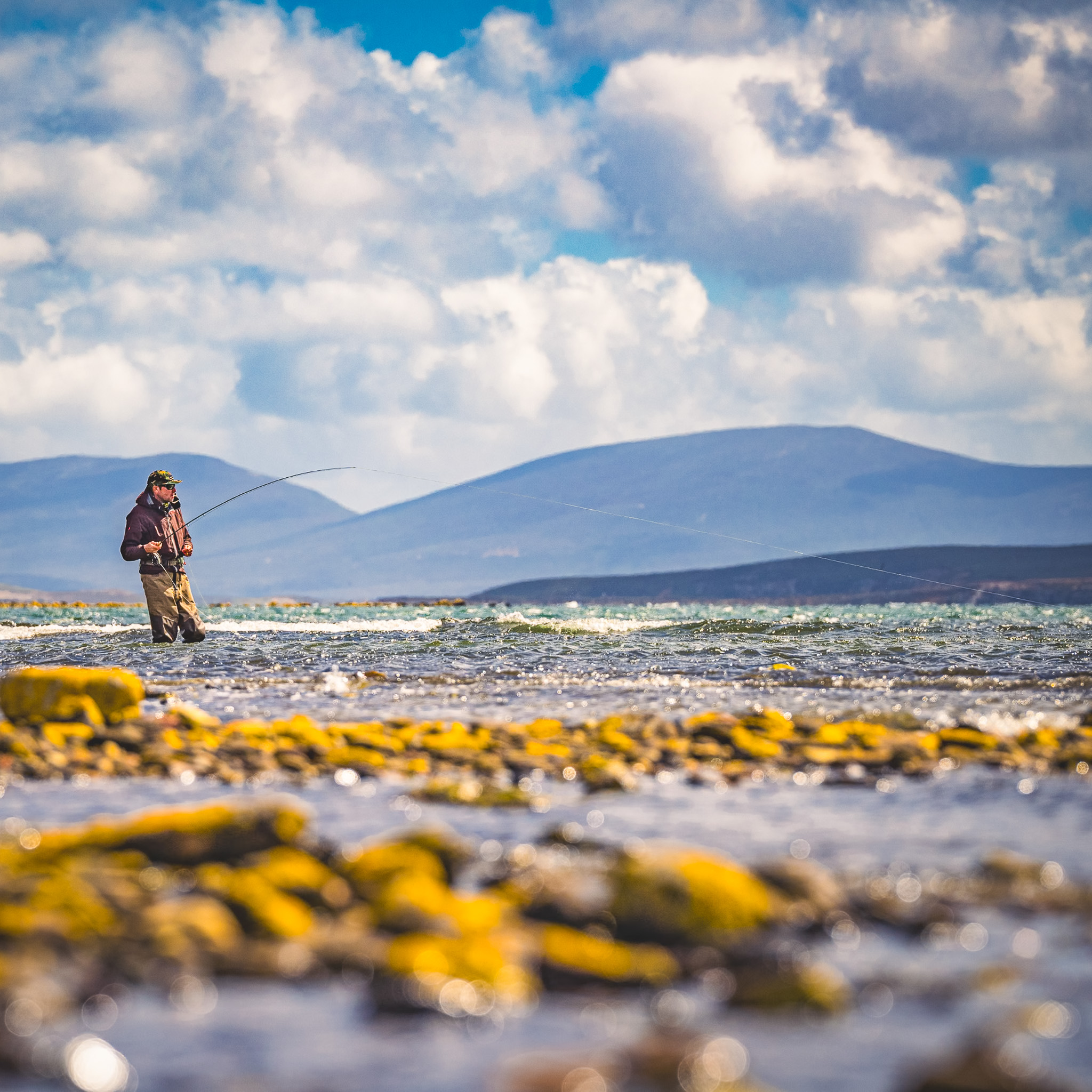
It can be (often is) windy in the Falklands. Most of the fishing we did was either in the tidal pools of rivers and into the estuaries (mostly smaller compared to UK rivers).
Rods, Reels & Lines – Casting in the Wind
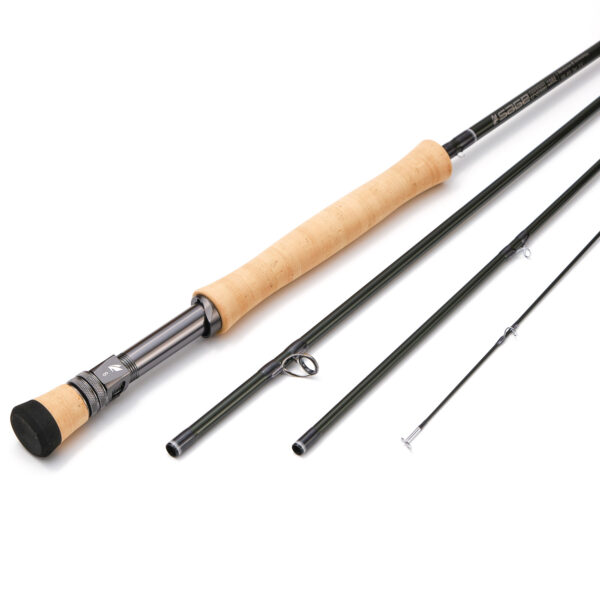
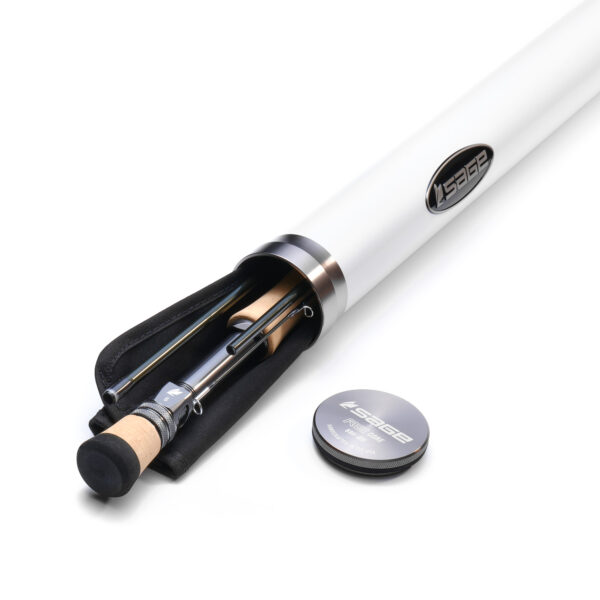
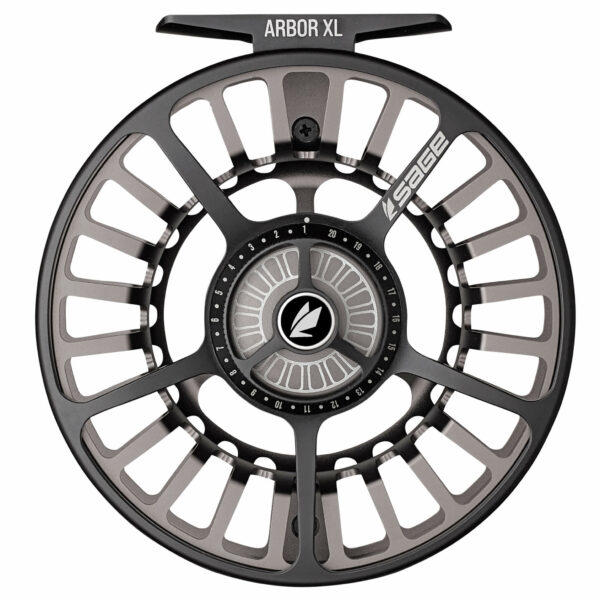
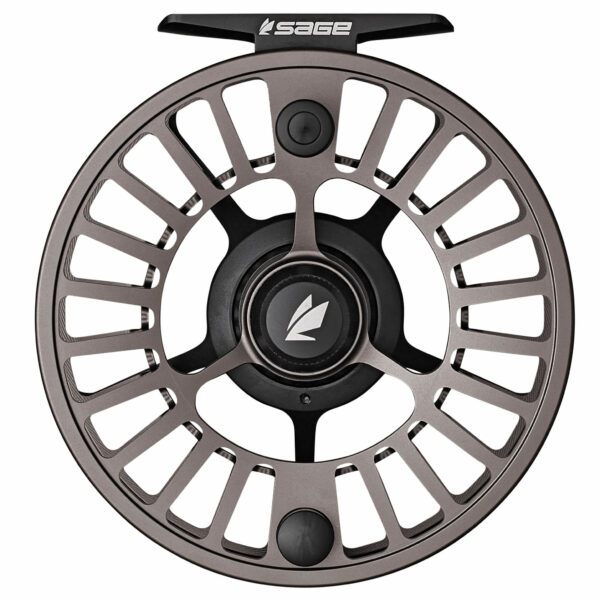
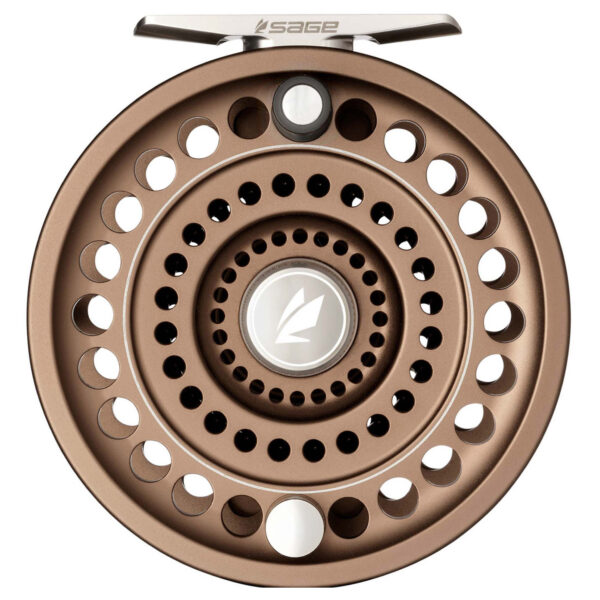
For the bulk of my fishing I used my Sage R8 Core 10’ #6 paired with the Sage Arbor XL fly reel. The R8 Core has an action that’s brilliantly suited to long days on the water in sometimes difficult conditions – perfectly balanced, very light in hand and with that unmistakable R8 feel which makes casting seem effortless. It loads quickly, sends a line out with minimal effort and takes a huge amount of fatigue out of the equation. Yet it still packs more than enough power to deal with wind and the larger fish you’ll inevitably encounter, without ever feeling overly stiff or unforgiving.
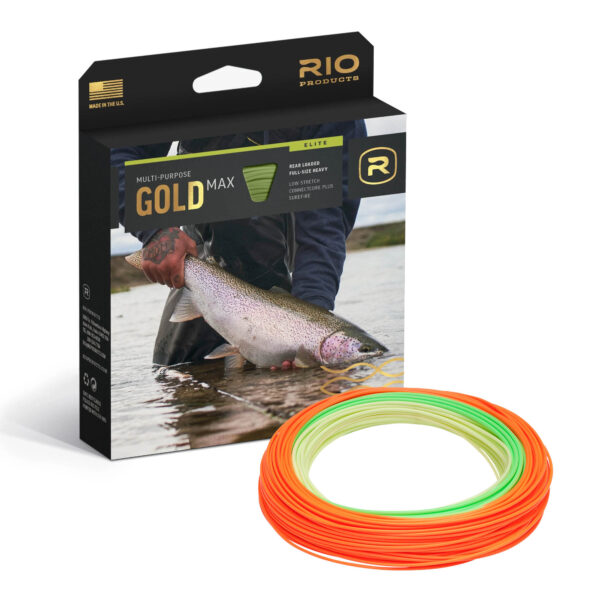
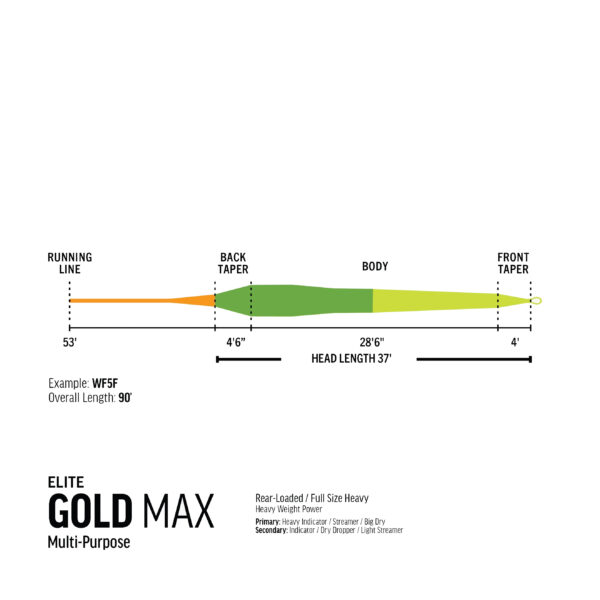
The line to best suit conditions and requirements here was the Elite RIO Gold Max. It’s a powerful line with a short head, perfect for punching flies out into the wind and its short rear taper means you can shoot line with ease. The addition of a 10ft intermediate RIO Medium Versileader was ideal for fishing the flies a little deeper and digging them in.
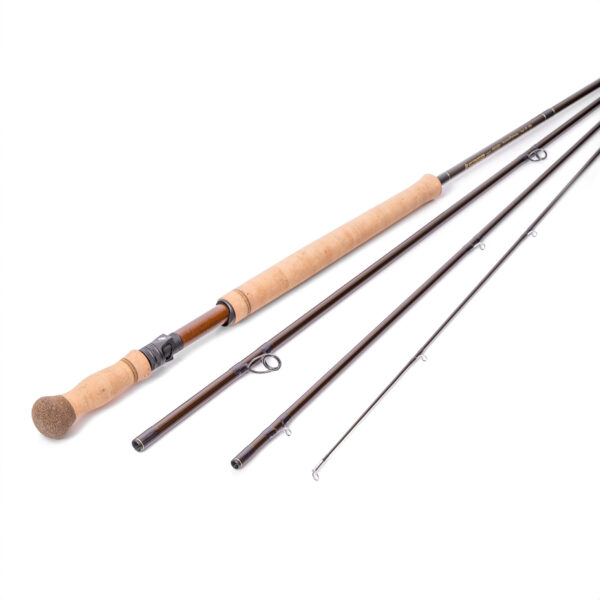
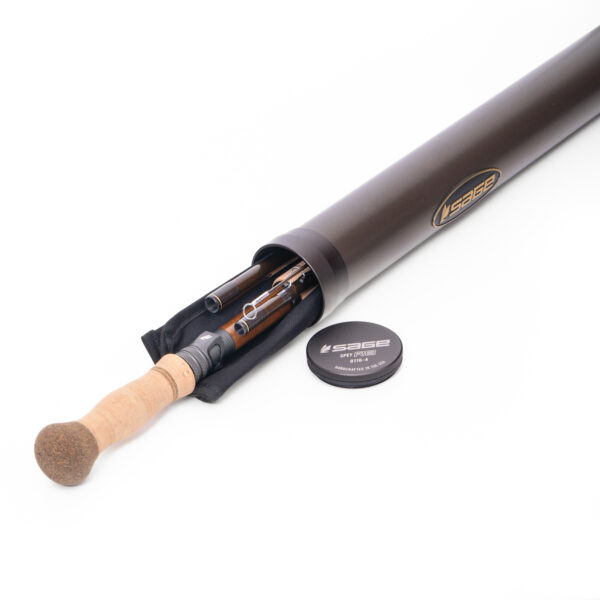
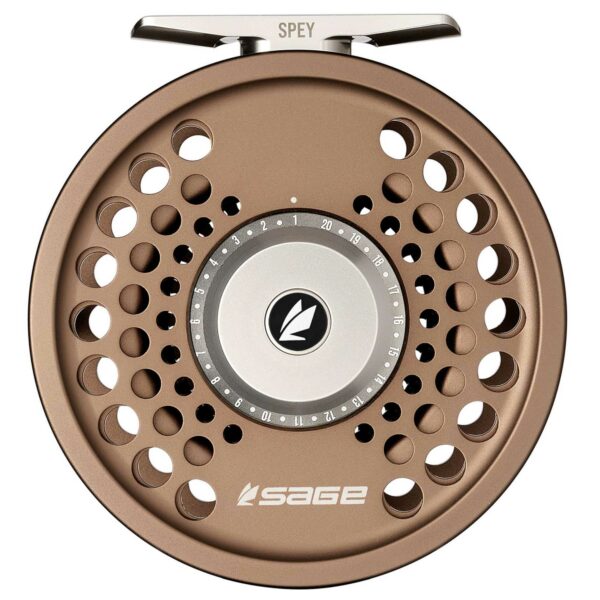
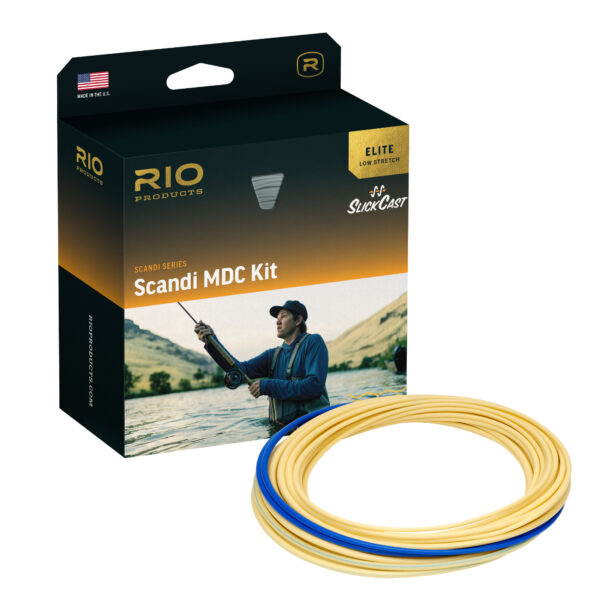
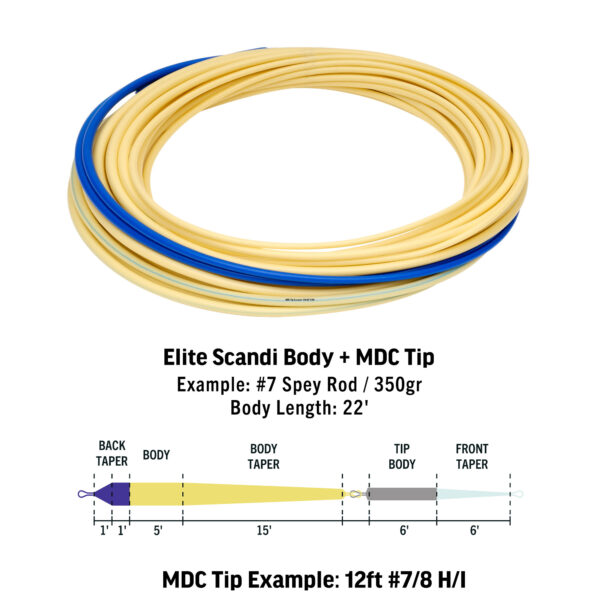
The Sage R8 Core 10’ #7 may well be preferable for dealing with particularly strong winds but in rougher weather I used the Sage Spey R8 Switch 11’6, #8 and Sage Spey II fly reel. Although they’re very different rods in design and purpose, the shared R8 technology gives them similar characteristics – easy to load, beautifully intuitive to cast and with plenty of power in reserve. The Switch rod was ideal when the conditions turned tougher, offering the extra reach and power needed to control the line and handle double-figure sea trout. It also let me fish deeper at times with the RIO Elite Scandi MDC Kit Short. Multi-tip line systems are ideal for travelling, allowing you a large range of depth options using the same reel. Though the 12ft hover/intermediate dual destiny tip was usually as heavy as I needed to go.
In particularly strong winds I also had the option of a F/H/I RIO Elite GameChanger Body shooting head set up as a skagit line. This is a line that allows you to get your fly where it needs to go, no matter what the wind is doing. And used in conjunction with dual density tips from the MDC kit it lets you easily fish as deep as you need too.
Tippet – Strong Material for Strong Fish
Tippet-wise there is absolutely no point whatsoever in fishing too light, especially in the salt or brackish water where bladderwrack, seaweed and general flotsam and jetsam is moved by tidal currents and/or strong winds through the channels that the sea trout love to congregate in. Complete faith in whatever tippet you use is essential and for me it’s RIO Fluoroflex Strong, here in 15.5lb breaking strain. When using a tapered leader I opted for the 9ft 16lb RIO Fluoroflex Bonefish/Saltwater Leaders as the stiffness of the material helps turnover flies in strong winds and they have great abrasion resistance.
Other than flies, for which detailed research and as much local knowledge as possible is key here, then that’s the essential fishing equipment covered.
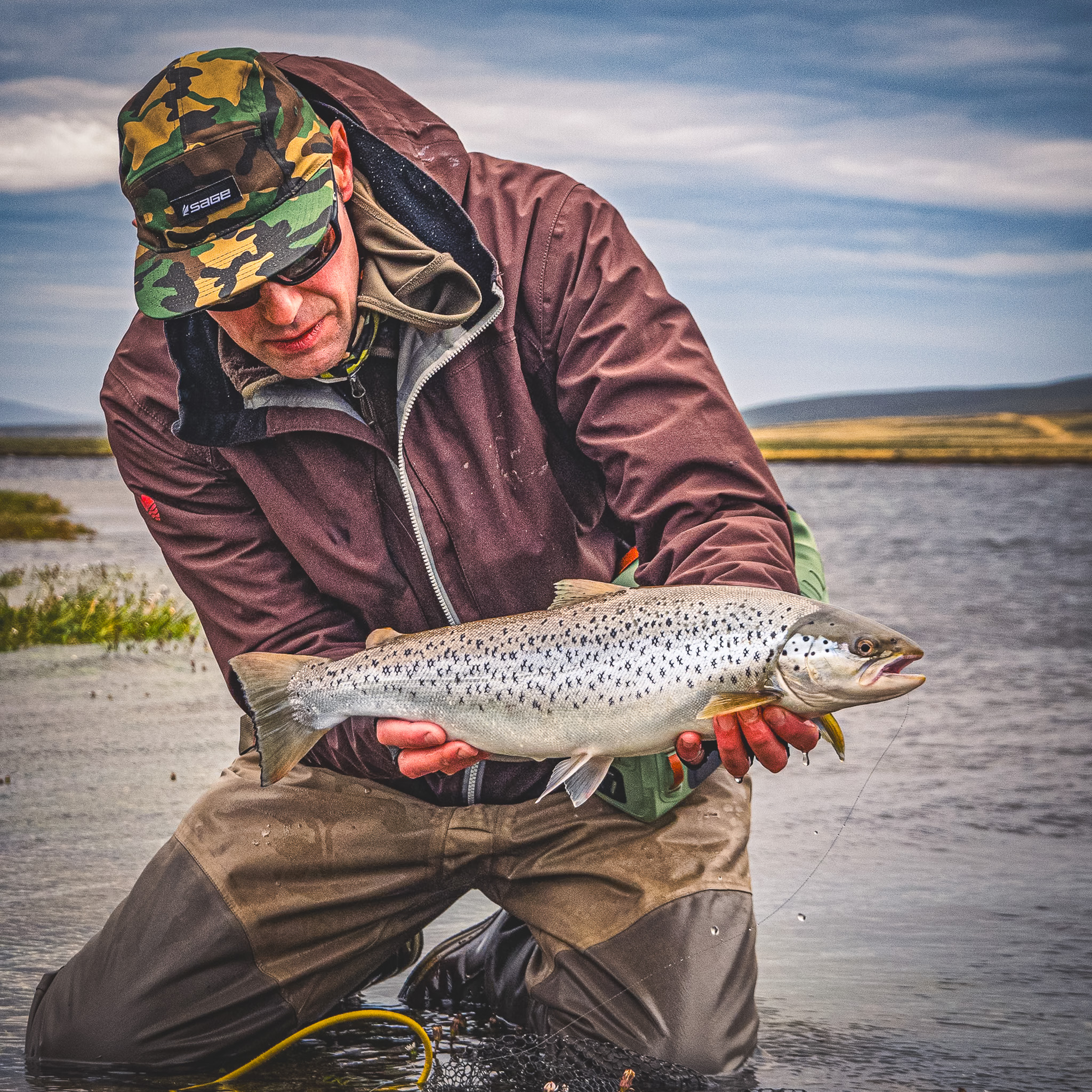
Clothing and Accessories
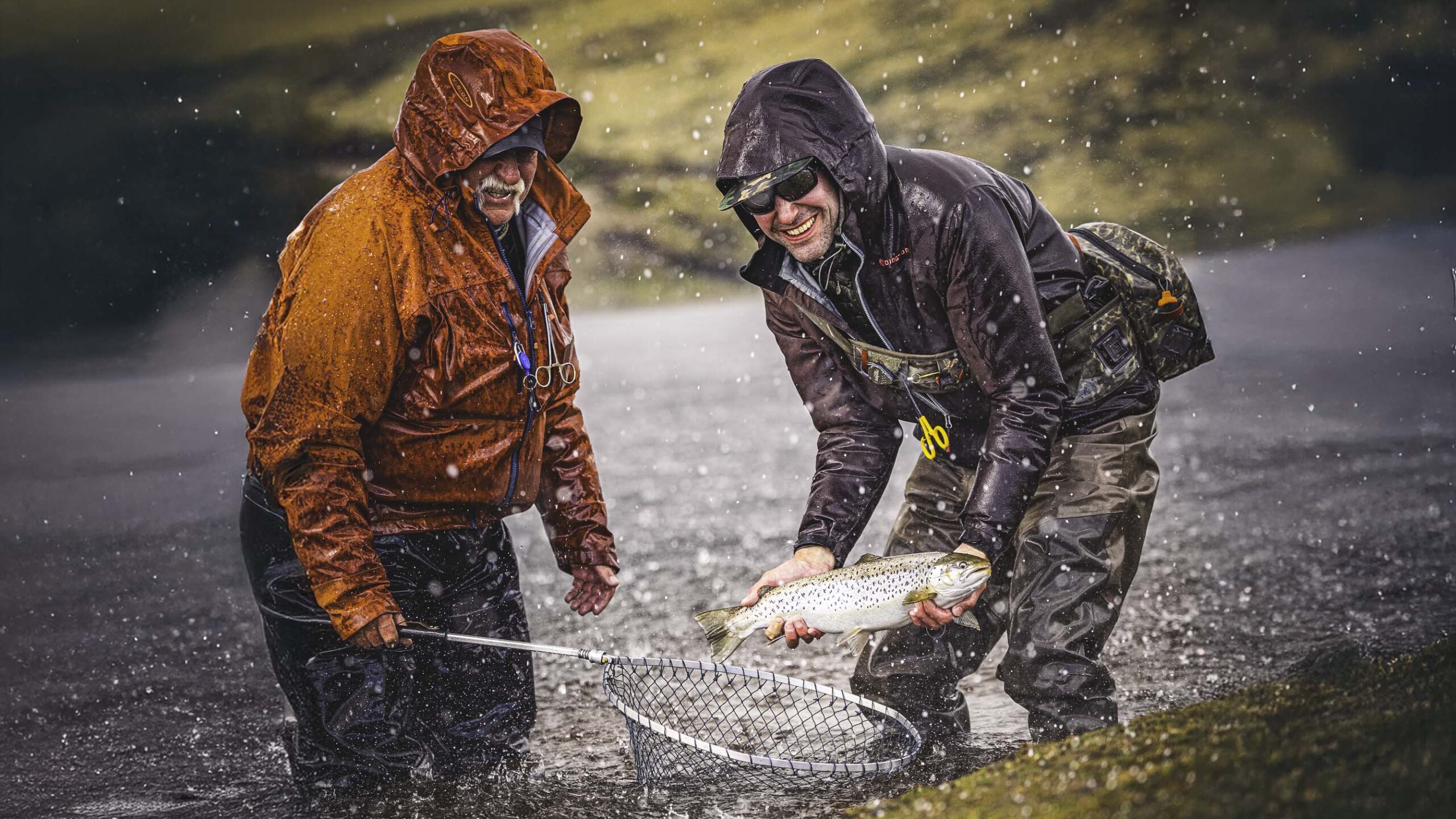
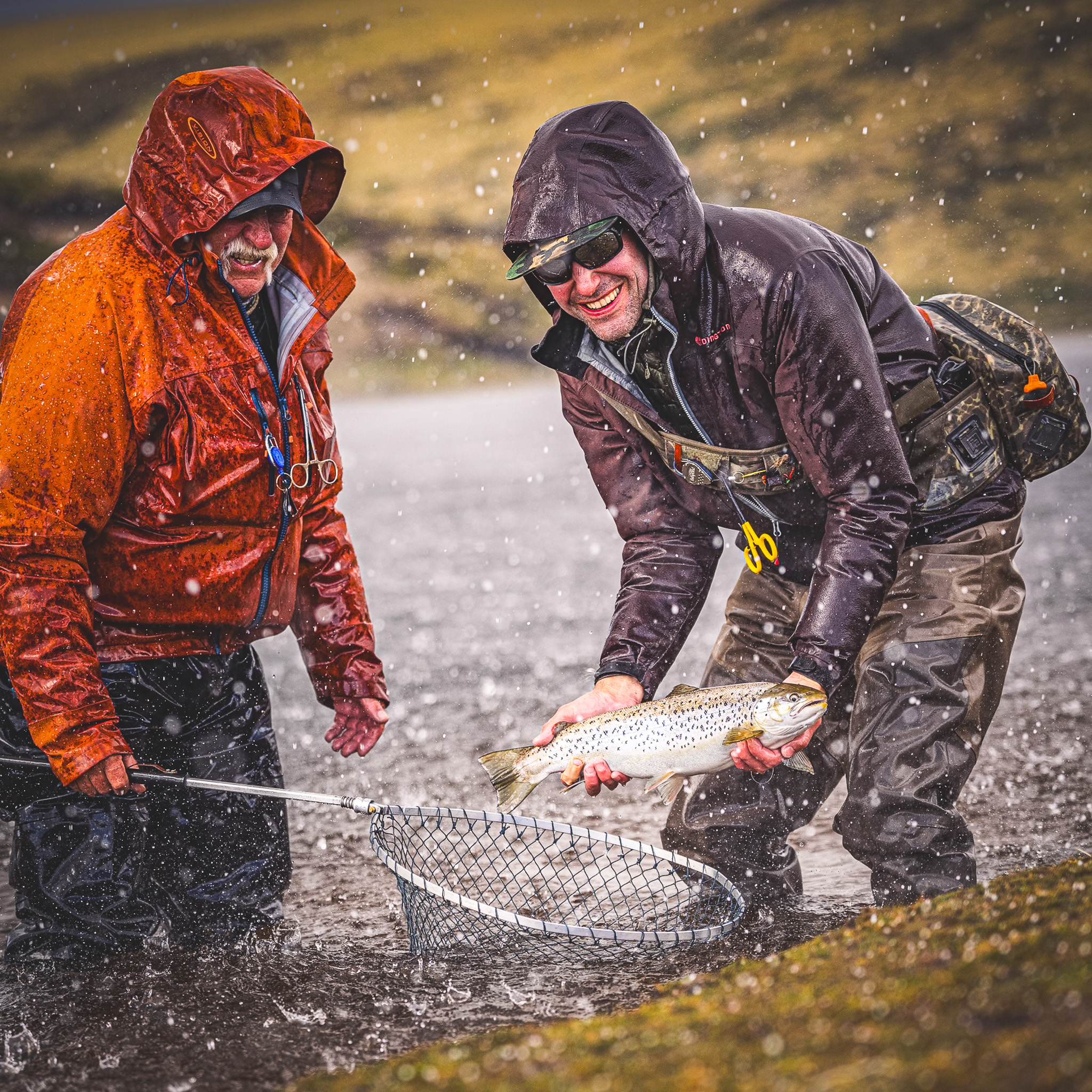
A fully waterproof and dependable wading jacket is of course vital, as are waders and boots you can fully trust. A spare pair of waders or at the very least a quick repair product Gulf Water Stop is excellent should also be packed.
Also make sure you’ve done your research on the best wader sole to have, and be aware that some territories don’t allow felt soles.
Being warm and comfortable underneath a waterproof wading jacket and waders is crucial. And there is simply no excuse for being cold given the selection of layered clothing systems theses days.
Another invaluable piece of kit was the Fishpond Thunderhead Submersible Lumbar. Travelling and fishing with as little gear, and as lightly, as possible is a major bonus and these lumbar packs are perfect for storing the small amount of accessories you should need for this kind of fishing. Keeping your kit dry in even the harshest rain (and hailstone) storms or when wading deep makes for a much more enjoyable experience.
Travel & Accommodation
Our trip was booked by the Falklands Tourist Board and we flew from Heathrow via Sao Paulo in Brazil, Santiago and Punta Arenas in Chile and on to Mount Pleasant Air Base in East Falklands, courtesy of LATAM airlines. There may soon be a direct flight from Sao Paulo to the Falklands.
Or you can take a more direct route, every Sunday and Wednesday, via an RAF plane from Brize Norton in Oxfordshire, an 18-hour flight with a stop to refuel in the Ascension Islands.
On the East we stayed at the incredibly relaxing and friendly-staffed Malvina House Hotel in Stanley. The food here is first rate and the Toothfish, a local favourite, is definitely not to be missed. A perfectly made Scotch Egg starter comes to mind too, as well as the peppered squid with aioli.
On the West we stayed at the Maria Motel in Port Howard. Seriously comfortable beds and blackout curtains were the perfect tonic after long days on the water.
We also spent two nights in self-catering at Shallow Bay. This is an idyllic location and full of character, with the added advantage of being closer to some of the best fishing.
The Fishing – Access, Permissions & Guides
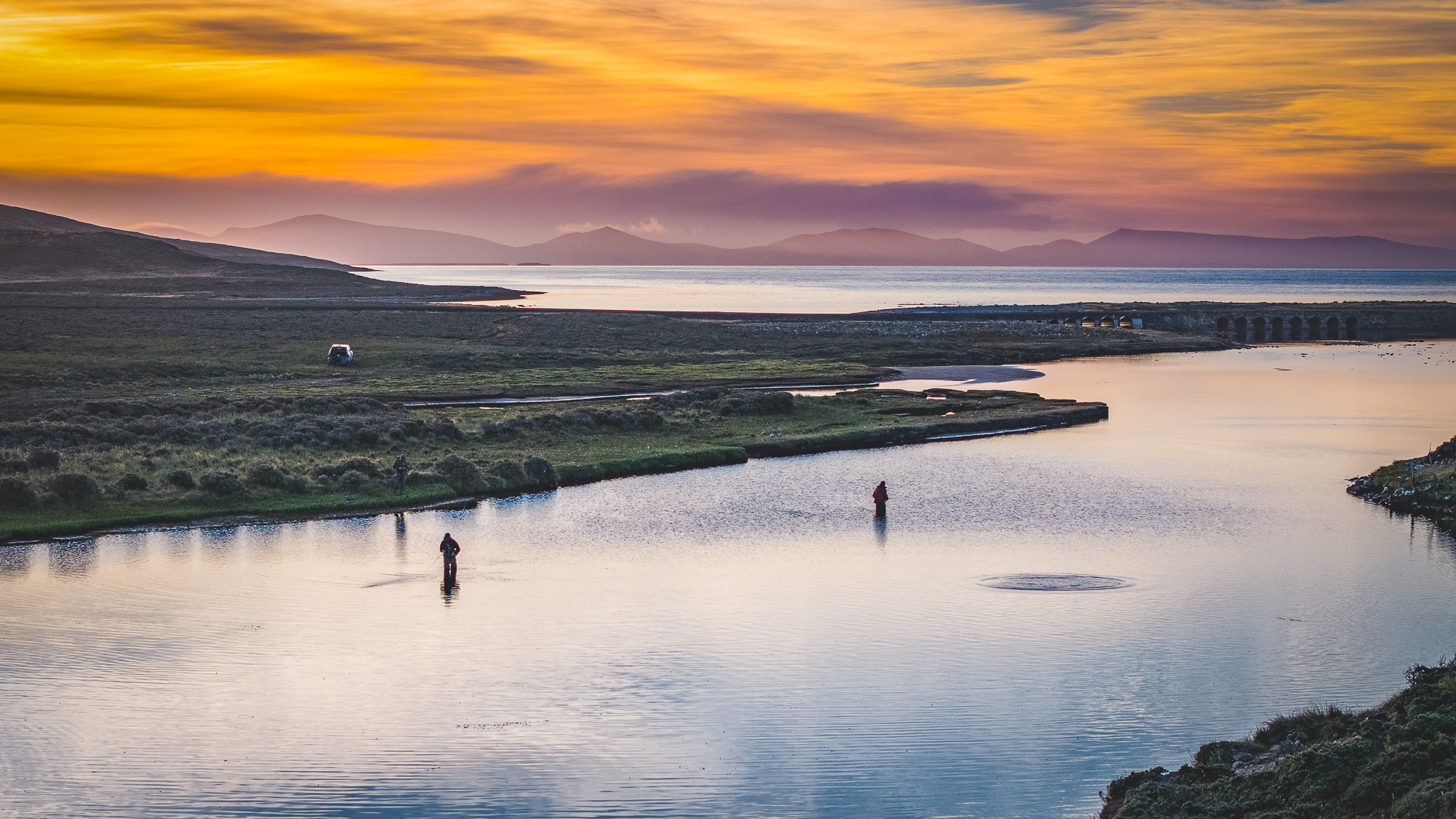
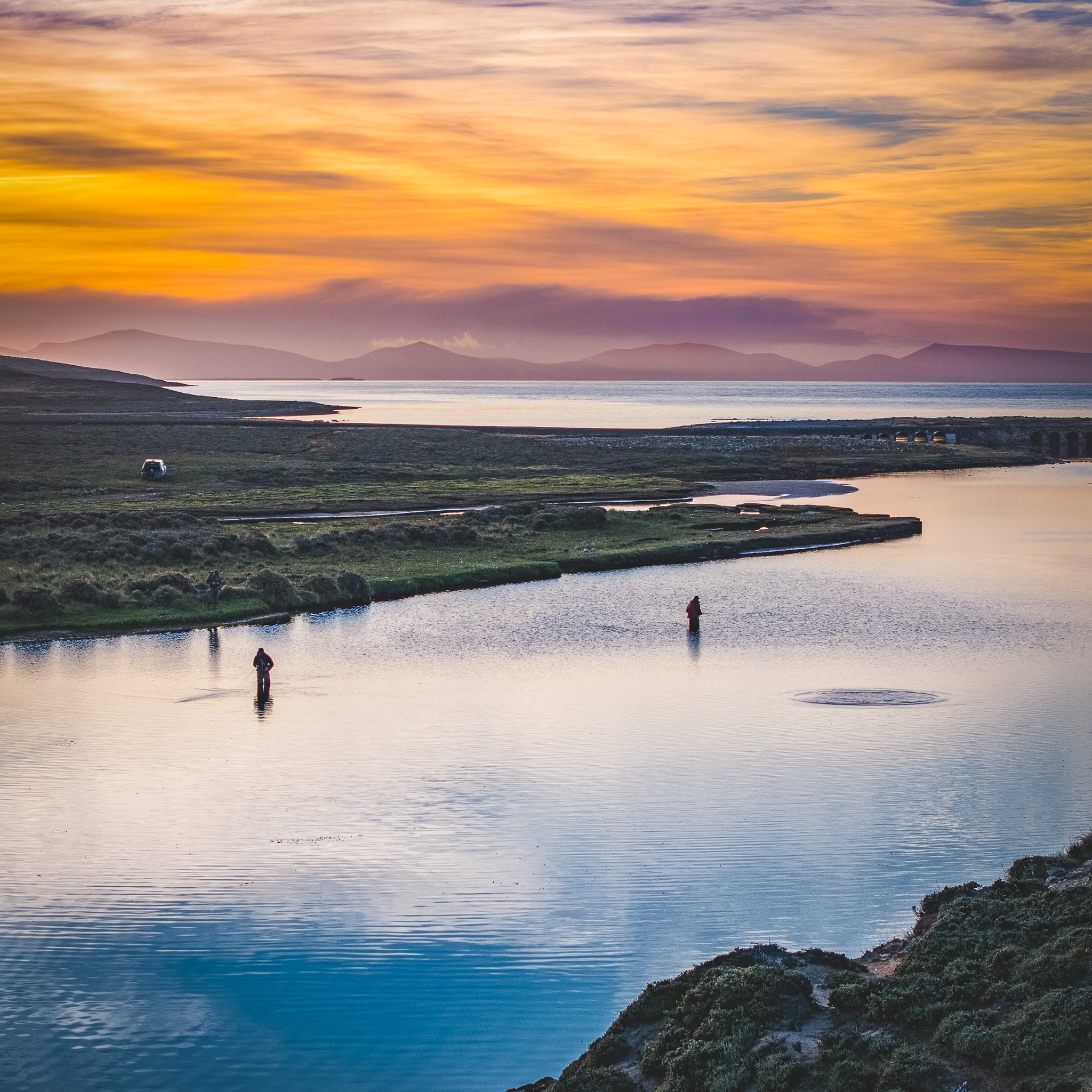
A rod license isn’t required and in many cases neither is a permit, but permission from the relevant landowners is and also payment in some cases. The Sound is £20 per rod, or can be booked exclusively for £200 per day which is ideal for a party of four for example. It is fly only.
A guide is strongly recommended. The islands are large, there is a vast amount of fishing to explore and even just getting to some places requires local knowledge and a good 4×4. If only just for knowing who to contact for permission, some help will save a lot of time.
Contacts
For all of the above, Nick Bonner is your man. You can contact him on Facebook or Tel: +500 55405
You can also contact the Falklands Tourist Board or Falklands Holidays who will be happy to point all visitors in the right direction.
The Sea Trout/Brown Trout/Salmon Fishing In The Falklands Group on Facebook is also well worth checking out.